Pharmaceutical From Standard to Specialist Capsule Formats Hard gelatin, HPMC, inhalation and vaginal formats engineered for every therapeutic need.
Nutraceutical Consumer-Ready Nutraceutical Formats Capsules and branded ingredients built for supplement manufacturers who demand differentiation.
Pharmaceutical CDMO
Accelerating Drug Development
Our Innovaform Accelerator and Tampa facility combine formulation science with scalable manufacturing.
CDMO Partnership
Full-Service Nutraceutical Manufacturing
From concept to market-ready product — your end-to-end nutraceutical development partner.
Our Story
Partners in Drug Delivery Innovation
A global leader in capsule technologies, committed to advancing pharmaceutical and nutraceutical science.
The commercial success of oral Glucagon-Like Peptide 1 Receptor Agonists (GLP-1 RAs) has brought fresh attention to the subject of oral biologics. Long awaited, their entry into the marketplace marks a pivotal change in drug development.1 For decades, biologic medicines, despite their transformative efficacy, have been constrained by the need for injection, a barrier that limits patient acceptance and adds additional workload pressure to already strained healthcare systems.1–4 The successful translation of GLP-1 RAs from injectables to an effective oral formulation challenges the long‑held assumption that peptides and proteins cannot be reliably delivered via the gastrointestinal (GI) tract, redefining what is possible for biologic drug delivery.4
Oral semaglutide, the first oral GLP-1 RA, launched as Rybelsus® in 2019 for the treatment of type 2 diabetes mellitus (T2DM), achieved a revenue of USD 3,281.9 million in 2024.4–6 It has since been rebranded as oral Ozempic®, granted FDA approval for the treatment of obesity under the brand name oral Wegovy®, and is predicted to grow to USD 12,662.5 million in revenue by 2035.5–7 Several factors have contributed to its commercial success. Diabetes and obesity are widespread and fast growing public health concerns, making the potential eligible patient pool large.8,9 It is also well established that the majority of patients prefer oral delivery to injections.10,11 ~90% of T2DM patients in a Japanese study preferred oral semaglutide over any tested injectable GLP-1 RA comparator.11 With Novo Nordisk’s injectable products Ozempic® and Wegovy® now household names with widespread use, the demand for an oral alternative was high.7
The technological breakthrough behind oral semaglutide is notable. Despite demand, historically the development of oral biologics has been hindered by the physiological and biochemical barriers of the GI tract.2–4 Large molecular size and structural complexity make biologics highly susceptible to degradation by gastric acid and digestive enzymes, leading to loss of activity before absorption can occur.2,3 Even if intact, their poor permeability across the intestinal epithelium limits systemic uptake, resulting in poor
bioavailability.2–4
Novo Nordisk overcame these barriers by formulating with sodium N-(8-[2-hydroxybenzoyl]amino)caprylate (SNAC), which acts both as a buffering agent, protecting the peptide from acid degradation, and a permeation enhancer, to increase absorption.4 The molecule semaglutide was particularly suited to oral formulation, due to its relatively low molecular weight, long half-life, and high potency.4
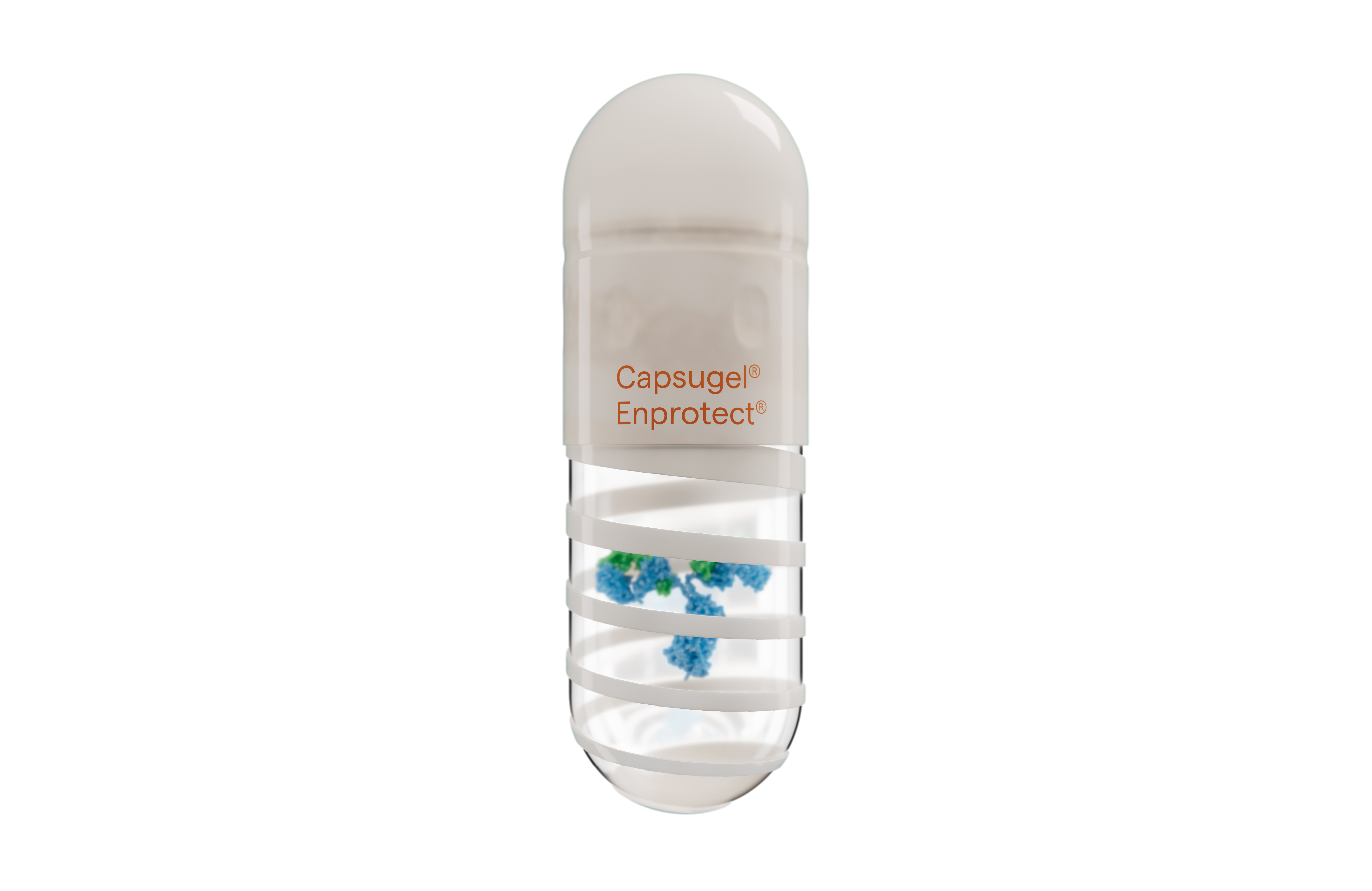
While SNAC co-formulation was sufficient for achieving clinical efficacy with semaglutide, widespread oral delivery of biologics will likely need technologies suited to the properties of the API and the intended delivery target. For example, if the API is acid labile and the target is the intestine, then enteric protection should be considered. Two studies have demonstrated the potential for Capsugel® Enprotect® capsules to deliver biological agents to the intestine.12,13 The first study demonstrated the potential to deliver pancrelipase for pancreatic insufficiency, while the second confirmed suitability for fecal microbiota transplant, a treatment for C. difficile infection.12–14 Unlike traditional enteric coated capsules, Capsugel® Enprotect® capsules are ready to use and don’t require post-filing coating.15 This can protect sensitive APIs from heat and solvents associated with this step, in addition to streamlining production.15
If the biological agent is intended for systemic distribution, then strategies to increase absorption should be considered.4 Permeation enhancers can transiently disrupt epithelial barriers, while lipid-based formulations (LBFs) can help molecules cross the phospholipid membrane of cells.2–4,16 In instances where the API is not lipophilic, such as in the case of proteins and peptides, hydrophobic ion pairing (HIP) can be used to charge the hydrophilic molecules, making them more lipophilic and compatible with LBFs.17
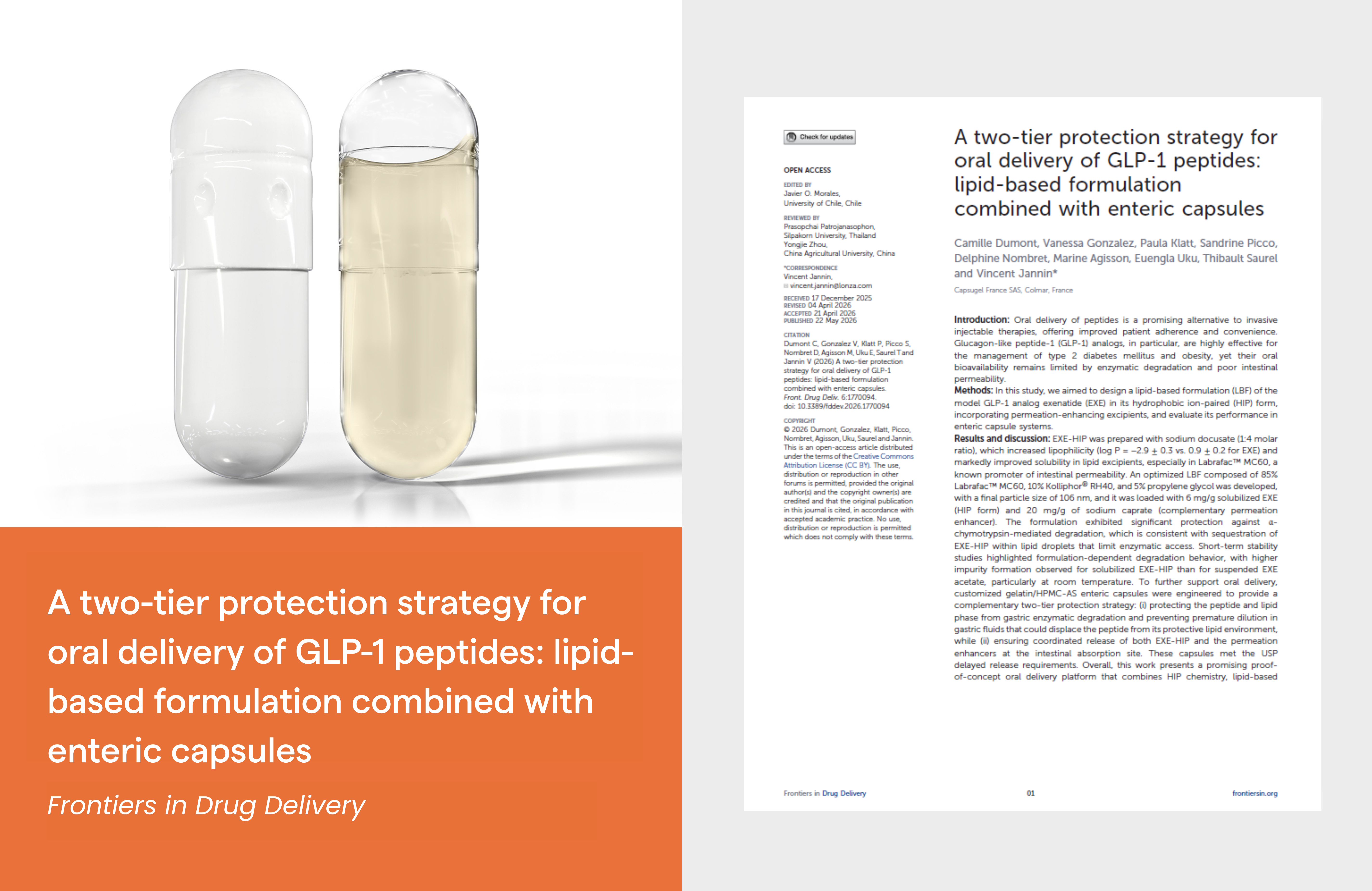
A scalable model combining enteric capsules and technologies to enhance bioavailability was recently demonstrated by Capsugel.18 Capsules were customized for compatibility with an LBF of exenatide, which utilized HIP and the permeation enhancer sodium caprate.18 This delivery platform is designed to protect the API from the harsh conditions of the stomach, delivering the capsule contents to the intestine, where both the LBF and permeation enhancer act to increase absorption of exenatide.18 Used together, this represents a ready-to-use model to boost bioavailability of oral peptides.18
Conclusion and future outlook
The success and adoption of oral GLP-1 RAs mark a shift in biologic drug delivery. Technologies such as permeation enhancers, LBFs, and enteric protection have made the oral delivery of biologics a reality. By combining biologic‑level efficacy with the convenience and reach of oral dosing, formulators can open the door to more patient‑centric therapies, earlier intervention, and broader access, setting the foundation for a future in which oral biologics are no longer the exception, but the expectation.
To learn more, contact your Lonza Capsugel expert today. Contact Us | Lonza
References
1. Mirasol F. Challenges, Innovations, and Future Outlook of Biologics Formulations. BioPharm International. Trends in Formulation eBook. 2025;38:6–10.
2. Masloh S, et al. Challenges and opportunities in the oral delivery of recombinant biologics pharmaceutics. 2023;15(5):1415. doi: 10.3390/pharmaceutics15051415.
3. Mantaj J, et al. Recent advances in the oral delivery of biologics. Pharm J. 2020. Available at: https://pharmaceutical-journal.com/article/research/recent-advances-in-the-oral-delivery-of-biologics. Accessed May 2026.
4. Aroda V, et al. A new era for oral peptides: SNAC and the development of oral semaglutide for the treatment of type 2 diabetes. Rev Endocr Metab Disord. 2022;23(5):979–994.
5. Drugs. Rybelsus FDA Approval History. 2026. Available at: https://www.drugs.com/history/rybelsus.html#:~:text=FDA%20Approved:%20Yes%20(First%20approved,2%20Diabetes%2C%20Cardiovascular%20Risk%20Reduction. Accessed May 2026.
6. Grand View Horizon. Rybelsus (oral Semaglutide) - Semaglutide Market Statistics. Available at: https://www.grandviewresearch.com/horizon/statistics/semaglutide-market/product/rybelsus-oral-semaglutide/global. Accessed May 2026.
7. HCP Live. Novo Nordisk Rebrands Rybelsus as Ozempic to Increase Patient Awareness. Available at: https://www.hcplive.com/view/novo-nordisk-rebrands-rybelsus-as-ozempic-to-increase-patient-awareness. Accessed May 2026.
8. Santulli G. From needles to pills: Oral GLP-1 therapy enters the obesity arena. Cardiovasc Diabetol Endocrinol Rep. 2025;11(1):31.
9. Hossain J, et al. Diabetes mellitus, the fastest growing global public health concern: Early detection should be focused. Health Sci Rep. 2024;7(3):e2004. doi: 10.1002/hsr2.2004.
10. Myers J, et al. Preference for novel alternative to parenterally administered medications. Patient Pref Adher. 2024;18:1547–1562.
11. Igarashi A, et al. Preference for oral and injectable GLP-1 RA therapy profiles in Japanese patients with type 2 diabetes: A discrete choice experiment. Adv Ther. 2020;38(1):721–738.
12. Jannin V, et al. In vitro evaluation of the gastrointestinal delivery of acid-sensitive pancrelipase in a next generation enteric capsule using an exocrine pancreatic insufficiency disease model. Int J Pharm. 2023:630:122441. doi: 10.1016/j.ijpharm.2022.122441.
13. Jannin V, et al. Enteric properties of Capsugel® Enprotect® capsules filled with Fecal Microbiota Transplant are confirmed after 12-month storage at -80°C. ECP 2025. 24–25 March 2025, Porto, Portugal. Poster Presentation.
14. Bakken J, et al. Treating Clostridium difficile Infection with Fecal Microbiota Transplantation. Clin Gastroenterol Hepatol. 2011;9(12):1044–1049.
15. Grimm M, et al. In vivo evaluation of a gastro-resistant Enprotect® capsule under postprandial conditions. Pharmaceutics. 2023;15(11):2576. doi: 10.3390/pharmaceutics15112576.
16. Hashmi AR, et al. Advanced drug delivery strategies to overcome solubility and permeability challenges: Driving biopharmaceutical advancements toward commercial success. ACS Omega. 2025;10(36):40769–40792.
17. Wibel R, et al. Hydrophobic ion pairing (HIP) of (poly)peptide drugs: Benefits and drawbacks of different preparation methods. Eur J Pharm Biopharm. 2020:151:73-80. doi: 10.1016/j.ejpb.2020.04.004.
18. Dumont C, et al. Improving oral bioavailability of therapeutics peptides with lipid-based formulations and ready-to-use customized enteric capsules. AAPS PharmSci 360 Annual Meeting. 9–12 November 2025, San Antonio, TX. Poster M1230-06-38.
Related content
Latest CHI content