Pharmaceutical From Standard to Specialist Capsule Formats Hard gelatin, HPMC, inhalation and vaginal formats engineered for every therapeutic need.
Nutraceutical Consumer-Ready Nutraceutical Formats Capsules and branded ingredients built for supplement manufacturers who demand differentiation.
Pharmaceutical CDMO
Accelerating Drug Development
Our Innovaform Accelerator and Tampa facility combine formulation science with scalable manufacturing.
CDMO Partnership
Full-Service Nutraceutical Manufacturing
From concept to market-ready product — your end-to-end nutraceutical development partner.
Our Story
Partners in Drug Delivery Innovation
A global leader in capsule technologies, committed to advancing pharmaceutical and nutraceutical science.
Understanding patient attitudes and preferences has become an essential part of modern therapeutic decision making. The effectiveness of therapies doesn’t solely depend on the action of the medication itself, but also on additional factors, e.g. how it is formulated and administered. Evidence from treatment preference research highlights that factors such as dosing frequency, administration complexity, treatment convenience, trust in a therapy’s efficacy, and treatment safety/perceived treatment burden consistently influence patient satisfaction, choice of treatment, and long-term patient response/adherence.1–3
Among these factors, the burden associated with injectable therapies is particularly considerable. A large 2022 international survey found that 63% of adults reported a fear of needles, along with significant anxiety and pain senstivity.4 This emotional barrier comes with practical concerns, as many reported avoiding key medical procedures (e.g. blood draws, vaccinations, treatment, or pain-relief injections) and identified preferable alternatives (e.g. smaller needles, different device styles, and non-invasive solutions).4 These preferred options align with factors from the previously mentioned research that would influence treatment acceptance and adherence.
Due to this, there is a growing interest in oral or needle-free versions of therapies traditionally administered by injection. A large survey of adults taking injectable therapies for chronic conditions showed that many patients would choose oral over parenteral therapy, even if the dosing frequency with the oral option was increased.3 These less invasive options offer greater convenience and the potential of better compliance, adherence, and quality of life, as well as reduced costs.3,5,6
Oralglucagon-like peptide-1 receptor agonists (GLP-1 RAs)
The drive for an oral treatment option is clearly seen in the evolution of GLP-1 RAs—this widely-used therapy class, traditionally only available as a subcutaneous (SC) injection, is used to treat type 2 diabetes mellitus (T2DM) and, increasingly, for obesity and weight management.7 The accelerated demand for weight management therapies globally has also driven the rapid development of more accessible formulations for patients.7,8 Innovations in oral GLP-1 RAs, including oral semaglutide (Rybelsus®) and orforglipron, have emerged directly in response to this.5,8
Clinical trial data and network meta-analyses of oral semaglutide and orforglipron confirm that patients can achieve clinically meaningful responses without the need for injection, while the side-effect profile remains consistent with the traditional route of administration.5,9 With trust in efficacy and consistent tolerability ticked off, research also overwhelmingly supports patient preference of oral GLP-1 RAs over injectables: 84% of patients in a large study in Saudi Arabia preferred once-daily oral GLP-1 RA vs once-weekly SC injection;10 similarly, ~90% of T2DM patients in a Japanese study preferred oral semaglutide over any tested injectable GLP-1 RA comparator.11
Capsugel and oral biologic delivery
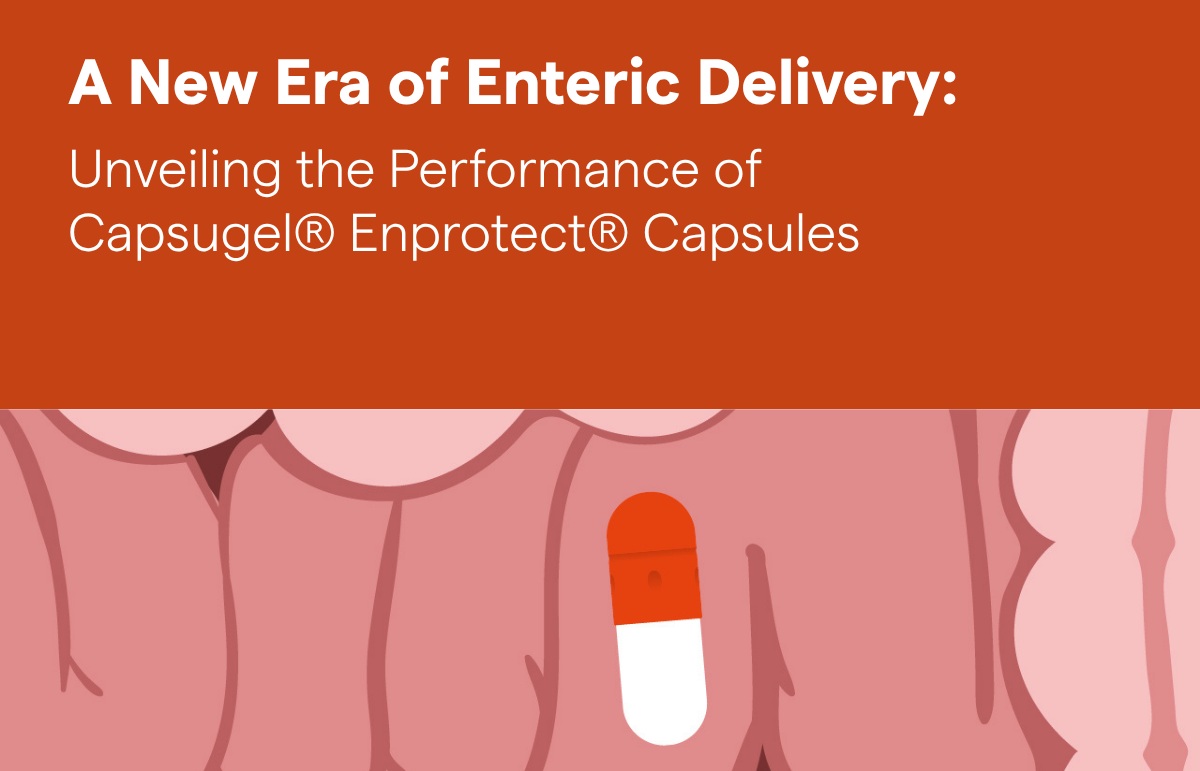
Innovaform® Accelerator is Capsugel’s innovation center for novel drug delivery systems—our scientists support clients to develop bespoke formulation strategies for every step of a product’s lifecycle, working to advance the capabilities of oral dosage delivery. Capsugel have developed a unique manufacturing process to produce bi-layered Capsugel® Enprotect® capsules, inherently protecting acid-sensitive APIs and allowing targeted enteric delivery without the need for a post-filling coating step.12 Capsugel® Enprotect® capsules are highly customizable and compatible with various polymers and formulations designed to enhance bioavailability and permeability of APIs.13
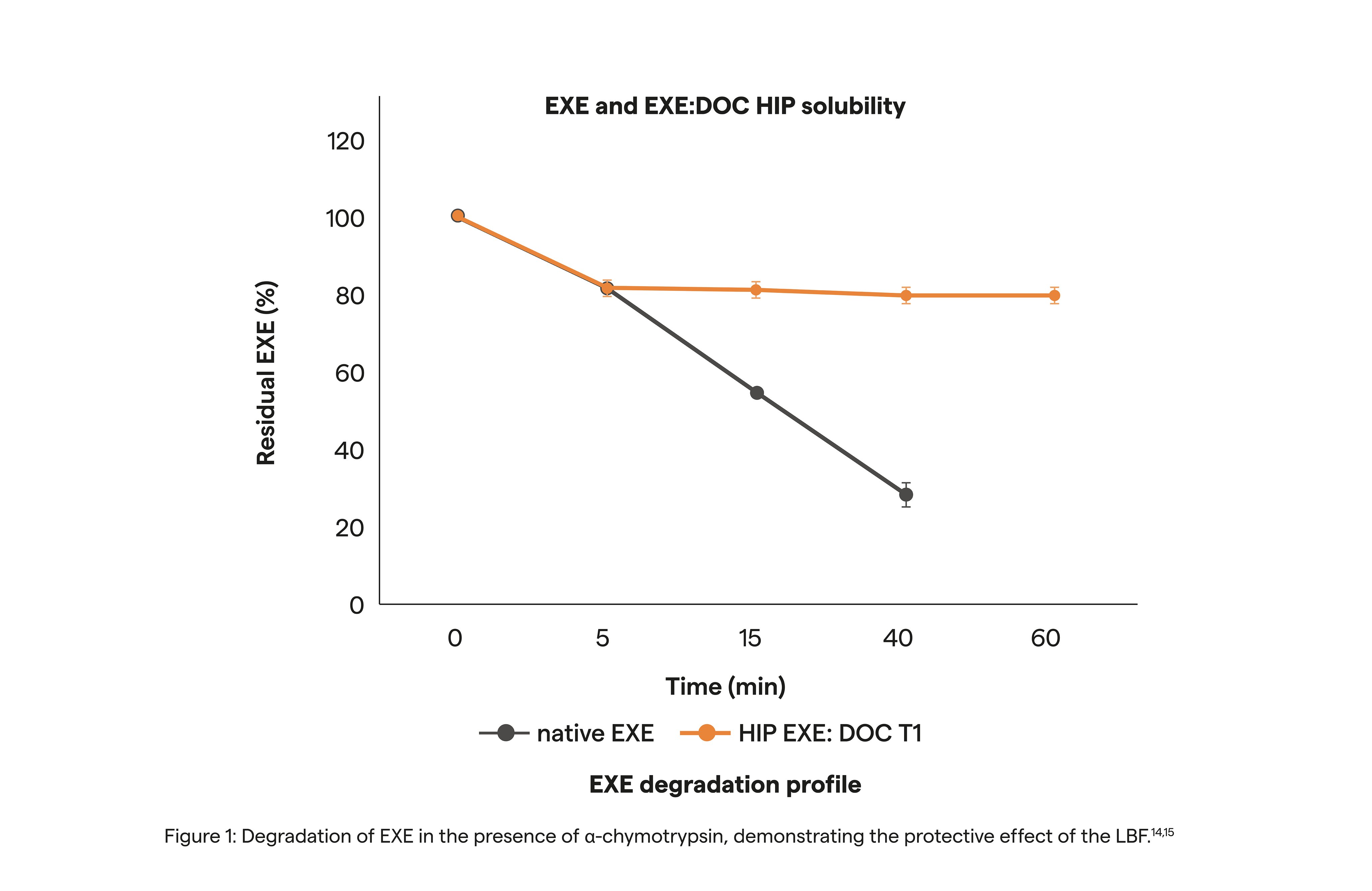
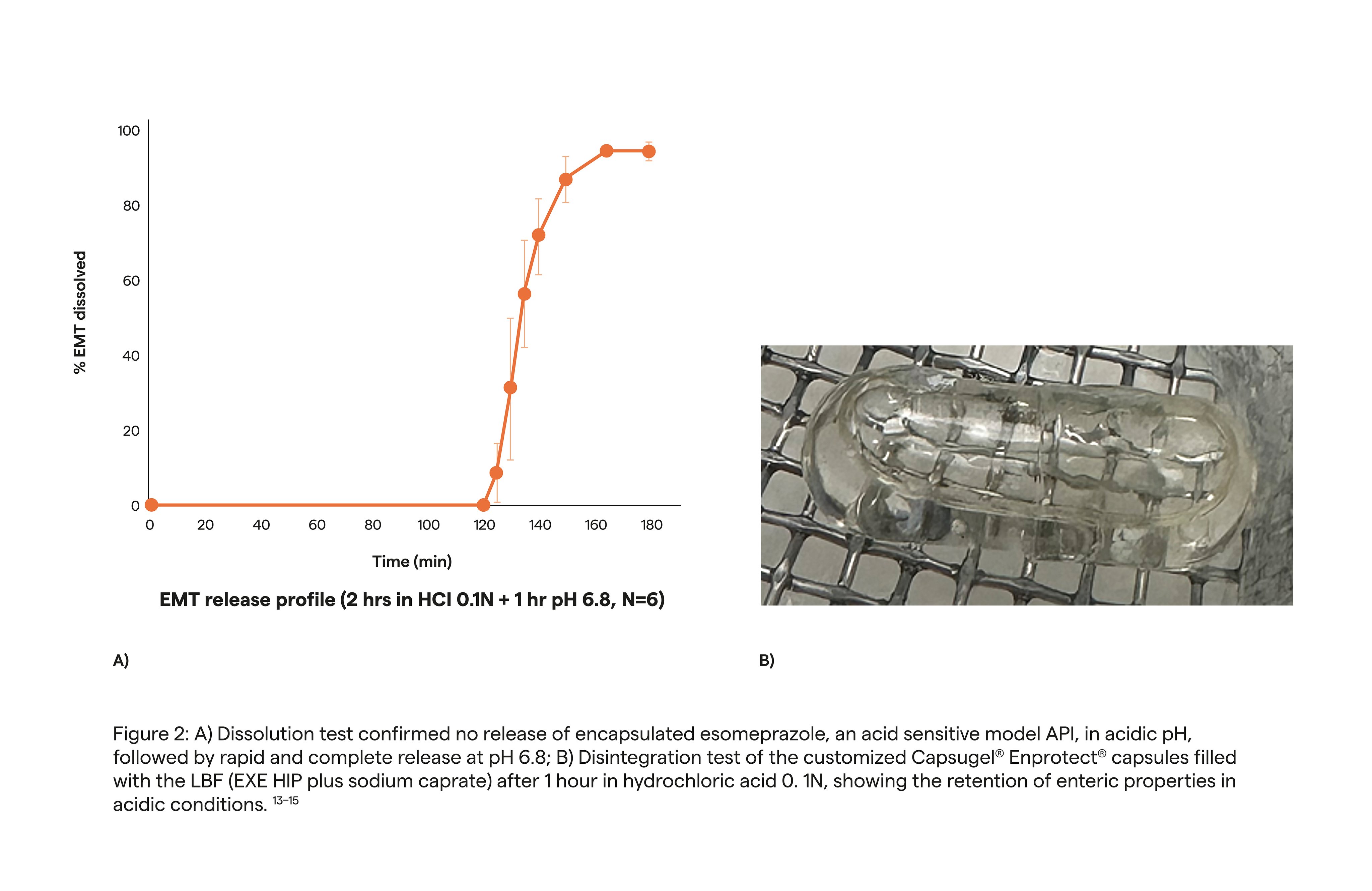
Scientists at Innovaform® Accelerator were tasked with creating a solution for the GLP-1 RA exenatide (EXE) to be delivered orally. EXE is sensitive to proteases and in particular to α-chymotrypsin, thus requiring an enteric dosing form, if an oral administration route with good bioavailability were to be considered. A successful oral option with excellent protection against enzymatic degradation (Figure 1) was developed by combining a lipid-based formulation (LBF), created by forming hydrophobic ion pairs (HIPs) with EXE using sodium docusate and adding the permeation enhancer sodium caprate, with customized Capsugel® Enprotect® gelatin/hydroxypropyl methylcellulose acetate succinate (HPMC-AS) capsules to enable enteric delivery and avoid EXE degradation in the upper gastrointestinal tract (Figure 2).13–15
Conclusion
Patient preference research illustrates an evolving trend in modern healthcare: patients value simplicity, non‑invasive administration, and treatments that seamlessly integrate into daily life.1–4 Oral GLP‑1 RA therapies exemplify how aligning delivery routes with patient preferences can support patient response/adherence and help achieve better long‑term outcomes.5,7 Capsugel are committed to advancing the capabilities of oral drug delivery, with already established success stories with oral GLP-1 RAs.13–15 Innovaform® Accelerator provides bespoke solutions for formulation development, capsule innovation, and process optimization as a trusted partner for any product.
1 Stewart KD, et al. Preference for pharmaceutical formulation and treatment process attributes. Patient Prefer Adherence. 2016;10:1385–1399.
2 Losi S, et al. The role of patient preferences in adherence to treatment in chronic disease: A narrative review. Drug Target Insights. 2021;15:13–20.
3 Myers JT, et al. Preference for a novel oral alternative to parenterally administered medications. Patient Prefer Adherence. 2024;18:1547–1562.
4 Alsbrooks K and Hoerauf K. Prevalence, causes, impacts, and management of needle phobia: An international survey of a general adult population. PLOS One. 2022;17(11):e0276814.
5 Santulli G. From needles to pills: Oral GLP-1 therapy enters the obesity arena. Cardiovasc Diabetol Endocrinol Rep. 2025;11(1):31.
6 Chubb B, et al. The cost-effectiveness of oral semaglutide in patients treated with currently available GLP-1 receptor agonists - a UK perspective. Value In Health. 2020;23(Suppl 2):S509.
7 Wong HY, et al. Efficacy of GLP-1 receptor agonists on weight loss, BMI, and waist circumference for patients with obesity or overweight: A systematic review, meta-analysis, and meta-regression of 47 randomized controlled trials. Diab Care. 2025;48(2):292–300.
8 Parums DV. Editorial: Global obesity rates continue to rise with challenges for new drug treatments including GLP-1 receptor agonists. Med Sci Monit. 2025;31:e950816.
9 Chubb B, et al. Once-daily oral semaglutide versus injectable GLP-1 RAs in people with type 2 diabetes inadequately controlled on basal insulin: Systematic review and network meta-analysis. Diabetes Ther. 2021;12(5):1325–1339.
10 Alshaikh A, et al. Perceptions and preferences toward GLP-1 receptor agonists in type 2 diabetes management in Saudi Arabia: A cross-sectional, two-arm study. Acta Sci Med Sci. 2022;6(11):41–46.
11 Igarashi A, et al. Preference for oral and injectable GLP-1 RA therapy profiles in Japanese patients with type 2 diabetes: A discrete choice experiment. Adv Ther. 2020;38(1):721–738.
12 Grimm M, et al. In vivo evaluation of a gastro-resistant Enprotect® capsule under postprandial conditions. Pharmaceutics. 2023;15(11):2576.
13 Dumont C, et al. Improving oral bioavailability of therapeutics peptides with lipid-based formulations and ready-to-use customized enteric capsules. AAPS PharmSci 360 Annual Meeting. 9–12 November 2025, San Antonio, TX. Poster M1230-06-38.
14 Lipid formulation in customized enteric capsule for oral GLP-1 receptor agonist peptide delivery. 2025. Available at: https://www.pharmaexcipients.com/wp-content/uploads/2025/07/Lipid-Based-Formulation-in.pdf. Accessed March 2026.
15 Jannin V, et al. Lipid formulations in customized enteric capsules show promising results for oral GLP-1 RA delivery. CRS Annual Meeting & Exposition. 13–18 July 2025, Philadelphia, PA. Oral Presentation.
Latest CHI content